Duterte Youth’s problems are of its own making
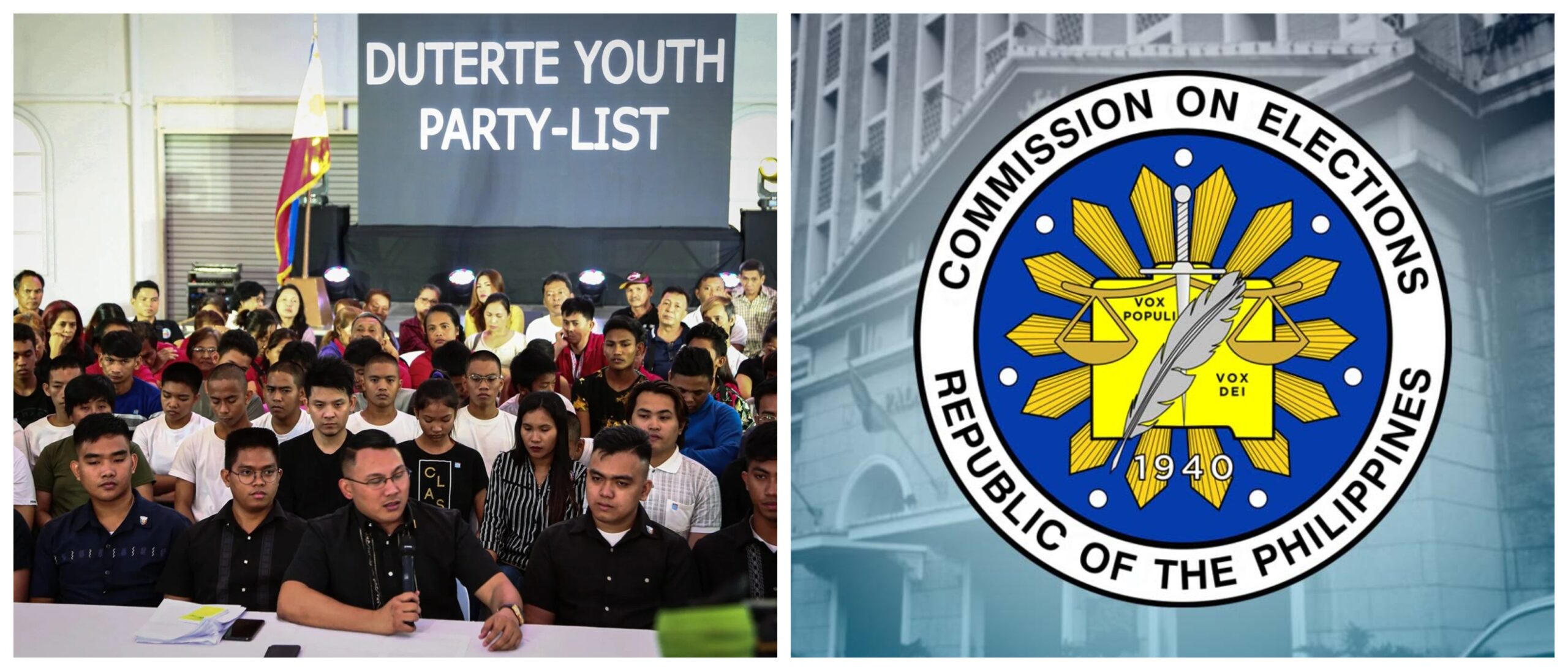
Despite receiving the second highest number of votes during the 2025 mid-term election, the Duterte Youth party-list is in danger of not having any representation in the House of Representatives at all.
This after the Commission on Elections (COMELEC) voted to cancel the group’s registration, in response to a complaint filed against them in 2019. The poll body found that Duterte Youth failed to meet statutory requirements for registration as a party-list, meaning it had no legitimacy to contest elections from the start.
Since entering Congress in 2019, the Duterte Youth party-list has been repeatedly mired in controversy. Its founder, Ronald Cardema, could not claim a seat in the House for exceeding the age for “youth” party-list representatives. The group has also engaged in red-tagging activists; misrepresenting the identity of its nominees; and spreading disinformation.

Yet it was that 2019 complaint, filed by student leaders, that sealed Duterte Youth’s fate. The petition alleged that the group failed to comply with Constitutional requirements to be accredited as a party-list, namely: to publish their registration in at least two nationwide newspapers, and to hold a public hearing on their application.
Both are mandated under the 1987 Constitution and Republic Act No. 7941 or the Party-List System Act, and should have been complied with from the outset. The very fact that Duterte Youth was able to contest three elections (2019, 2022, and 2025) without fulfilling these prerequisites already constitutes a violation of the law.
This also puts the COMELEC under the spotlight, as the agency tasked with ensuring candidates’ compliance with election laws. Why was Duterte Youth not disqualified from the start? The reason perhaps might be the group’s staunch support for the Duterte political dynasty, who still held power when the party-list was formed in 2019.
Although the group registered to represent the youth sector, it was barred from assuming a seat in the House as its nominee – Ronald Cardema – breached the age limit for those considered as ‘youth’. He could not be proclaimed as a party-list representative for the youth sector for being too old to qualify as a youth representative.
Far from being a genuine youth party-list, Duterte Youth is widely regarded as a proxy for the Duterte political dynasty, as its very name suggests. The group first drew nationwide attention in 2016 for staging a counter-protest in support of then-President Rodrigo Duterte, and since served as a mouthpiece for the Duterte regime’s flagship policies – including mandatory military training, lowering the age of criminal responsibility and reviving the death penalty.
In support of Duterte’s crackdown on left-wing activists, Cardema also floated the idea revoking government scholarships of students who participate in protests.

Cardema’s desperation to appease Duterte also manifested itself in social media posts that called on violence against so-called “communists”. A viral Facebook post from the Duterte Youth page threatened that it would “exterminate from the streets” the “comrades of the New People’s Army” – a common trope conflating non-armed activists with armed combatants of the communist rebellion.
Red-tagging was prevalent under the Duterte regime, and the Duterte Youth were prolific in the practice as well. To attack youth organizations critical of the Duterte Youth’s pronouncements, Cardema would often label those groups as ‘rebels’ or ‘terrorists’ in retaliation.
Not only are Cardema and his Duterte Youth party-list not composed of genuine youth representatives, the policies they espouse are anti-youth as well.
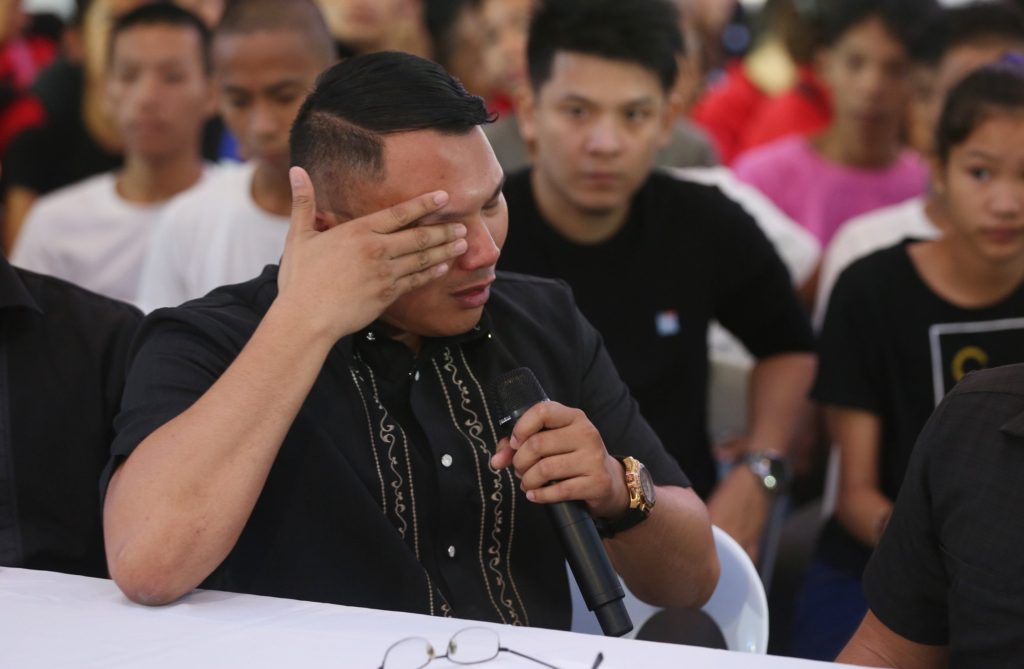
In its most recent election, the group also faced COMELEC investigation after one of its nominees allegedly misrepresented her surname in official documents. The individual declared her full name as “Drixie Mae Suarez Cardema”, despite only being the sister-in-law of Ronald Cardema and therefore having no claim to the surname.
The Duterte Youth’s founder Cardema came to his sister-in-law’s defense and claimed that her adoption of his surname was intended to spur “name recall” among voters. However, the COMELEC was deemed to view the move as a deliberate case of material representation instead.
The Duterte Youth and its supporters may try to paint the COMELEC’s decision as political persecution, alleging that the poll body’s decision is due to the group’s support for the Duterte political faction – which is now at odds with the Marcoses. Regardless of their spin, an objective view of this case will show that the Duterte Youth’s demise is purely their own doing.
Had they applied due diligence and ensured their compliance with the law, the Duterte Youth may be enjoying their three seats in the House of Representatives by now – as the second highest-polling group in the 2025 midterms. But because of their hubris and false belief that they could be above the law in perpetuity, they find themselves thrown outside the halls of power instead.