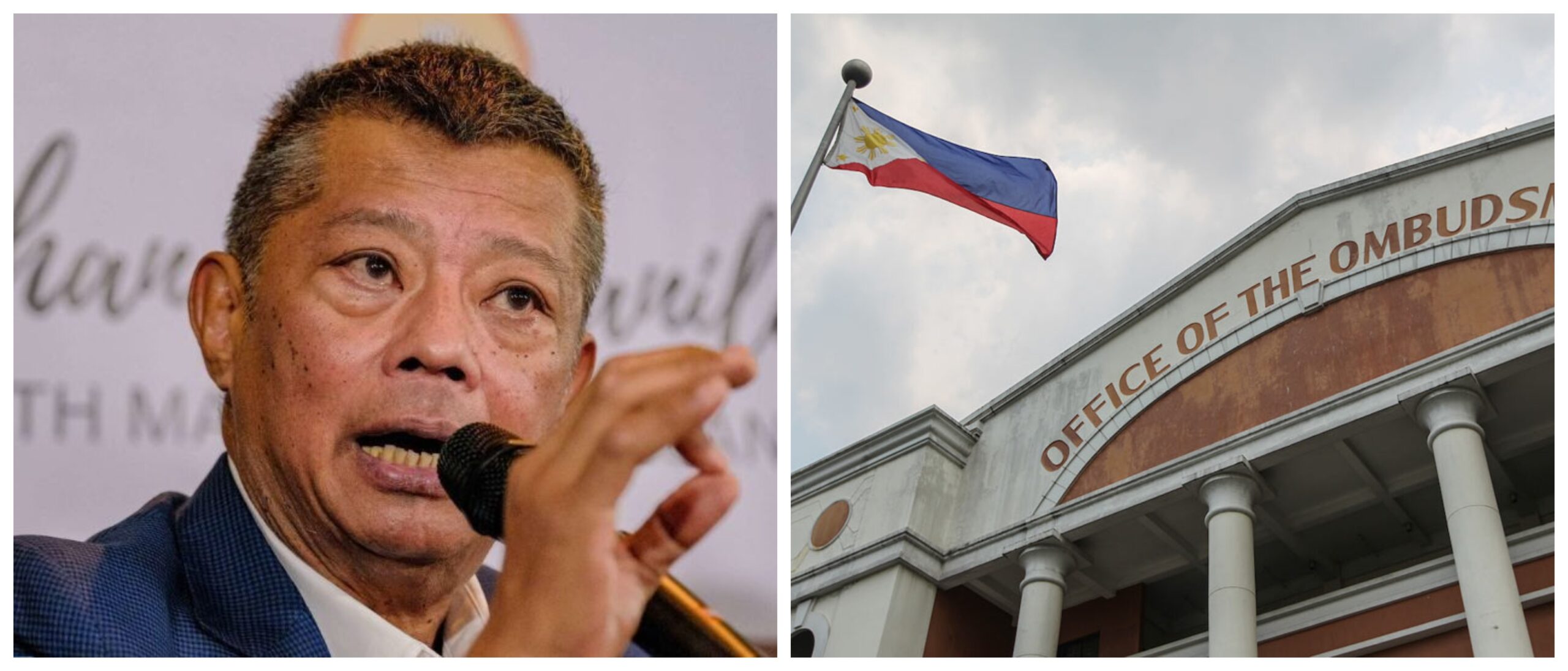
Why Boying Remulla should not be the next Ombudsman
As the term of incumbent Samuel Martires ends on 27 July, the search is on for the next Ombudsman of the Philippines.
This independent Constitutional position is much coveted among legal practitioners and is of interest to any sitting administration, given its vast powers. Not only does the Ombudsman have sole jurisdiction to investigate corruption among our highest-ranking public officials, it can also initiate cases against those powerful officials without needing a complaint filed first.
Given its powers and the enormous responsibility the office holds, it is crucial to ensure the right person is selected for the role.

The unconventional process involved in selecting the next Ombudsman is a testament to the importance of this office. Unlike presidential appointees or elected officials, prospective candidates are hand-picked by the Judicial and Bar Council (JBC), another Constitutional body comprised of the most prominent legal practitioners in the country – from the Chief Justice of the Supreme Court to members of the academe.
In the incoming search for Ombudsman Martires’ successor, the JBC announced that 17 individuals have expressed interest in the role. Among them are prominent names in Philippine politics like former revenue commissioner Kim Henares, sitting Supreme Court Associate Justice Samuel Gaerlan, and Melvin Matibag, who is the current secretary-general of the Duterte family’s political party – PDP-Laban.
Yet the name that raised the most alarm bells is that of incumbent Justice Secretary Jesus Crispin “Boying” Remulla. Being one of the most trusted officials in the Cabinet of President Ferdinand “Bongbong” Marcos Jr., Remulla has a very possible chance to be selected if shortlisted by the JBC.
Boying is perhaps the most senior member of the Remulla political dynasty of Cavite, one of the most vote-rich provinces in the country. Their control of the province has made this political dynasty very influential in national politics; last year, Boying’s brother – Jonvic Remulla – also joined him in Cabinet, having been appointed as Interior and Local Government Secretary last year.
Being kingpins of an important electorate already give the Remullas political prominence; having two important positions in Cabinet further bolsters the influence they wield. But to elevate one of those positions even higher, as Ombudsman, will give the Remullas tremendous leverage in our national politics.
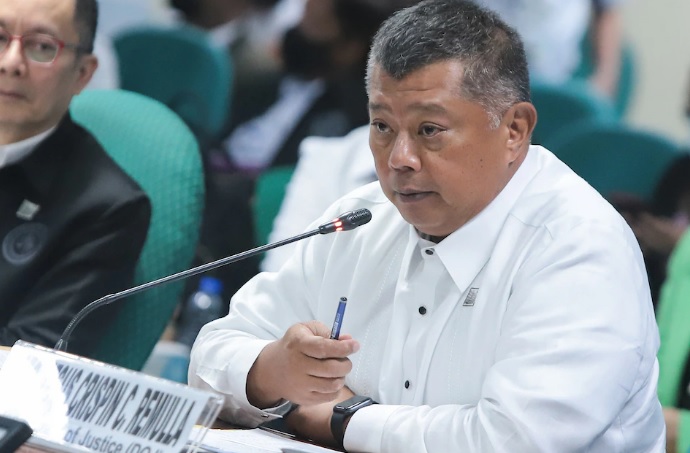
Even with their current level of power, the Remullas have given us reasons to doubt their ability to hold such positions with integrity.
A few months after Boying Remulla’s appointment as Justice Secretary in 2022, his son was nabbed at the Ninoy Aquino International Airport (NAIA) for a parcel containing Php1.3 million in high-grade marijuana. The arrest was particularly damning as the country had just come out of a brutal crackdown on small-time drug peddlers and drug users under the preceding Duterte regime.
With that precedent, one would hope that Remulla’s son would also face equally harsh consequences like those experienced by ordinary Filipinos who faced drug-related charges under Duterte’s so-called “war on drugs”.
Yet only months after his arrest, Remulla’s son would be acquitted of charges relating to the importing of illegal narcotics. There is no publicly-available proof that the Justice Secretary intervened in easing his son’s legal woes, but the experience of Remulla’s son was a lot more lenient compared to the ordinary Filipinos who were accused, whether legitimately or wrongly, of drug-related charges during the so-called “war on drugs”.
Last year, the Justice Secretary earned praise for his leading role in the crackdown on the now-banned Philippine Offshore Gaming Operators (POGOs). Remulla emerged as the key figure behind the Marcos administration’s legal actions against Guo Hua Ping, the Chinese national who assumed the identity of “Alice Guo” and was even elected town mayor of Bamban, Tarlac.

Perhaps Boying’s perceived heroism in that saga blinded many to the fact that his own family was linked to the POGO industry themselves. A 30-hectare property in Island Cove, Cavite was first owned by the Remullas before it was sold to the developers who would later turn it into the biggest POGO hub in the country.
Both Boying and his brother Jonvic distanced themselves from the property, stating that although their family developed Island Cove into a resort and leisure park, they had since sold it to First Orient International Ventures Corporation (FOIVC) – the company which then turned it into a POGO hub. However, an investigative report by Rappler.com exposed the suspicious turnover of FOIVC’s operations.
FOIVC was indeed owned by Justice Secretary Remulla, along with another brother – Gilbert – but by 2019, it had a new set of officers who included Kevin and Kathryn Wong – children of controversial Chinese businessman, Kim Wong, who was implicated in the infamous 2016 heist of Bangladesh’s central bank.
It could be the case that the Remullas had no involvement in the development of their former property into a POGO, or had prior knowledge that it would be converted to house the illegal gambling sector. However, the fact that they transacted with an individual with such an unscrupulous record with the law is cause for concern.
It is particularly concerning if a member of the Remulla family will become the next Ombudsman.

Putting those controversies aside, perhaps the biggest concern about Boying Remulla becoming the next Ombudsman is that his brother, Jonvic, is reportedly eyeing the presidency in 2028.
The Remulla brothers are arguably the closest ministers to the President in the latter’s Cabinet.
The Justice Secretary spearheaded the arrest of President Marcos’ friend-turned-nemesis, former president Rodrigo Duterte, by Interpol and his subsequent transfer to the International Criminal Court (ICC) in The Hague. Jonvic, as interior secretary, undoubtedly contributed too.
It won’t be surprising if Jonvic Remulla becomes the anointed candidate of the Marcos administration in the next presidential contest.
A scenario wherein one brother is the president, the other the Ombudsman, presents a dangerous power imbalance that imperils our democracy. The latter could protect his Chief Executive brother’s own allies from corruption suits, and conversely target their political opponents with bogus corruption investigations.
That will be on top of the fact that their political dynasty is already among the country’s most influential. With those considerations made, Boying’s bid for the Ombudsman office may be an attempt at empire-building rather than genuine public service.
If there is anything to learn from the history of Philippine politics, it’s that power – when concentrated too much with one family – will be abused and bastardized to retain their hold on power. One can hope that it won’t be the case with the Remullas, but there are already enough examples in their political pasts that makes it too risky to even risk this possibility.