What the new Ombudsman needs to do to regain the public’s trust
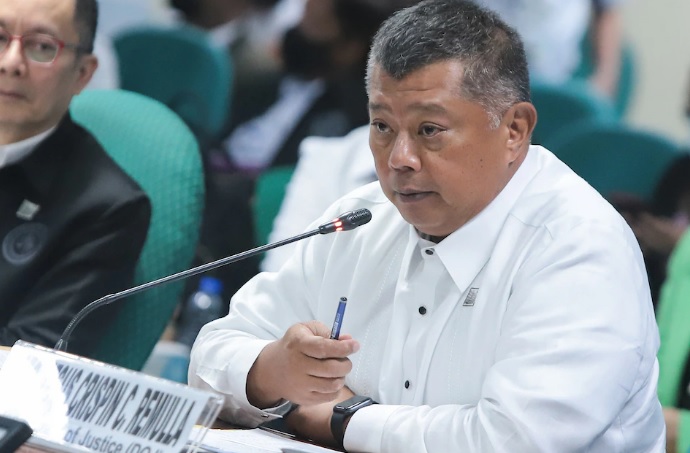
Despite earlier cautions raised by this blog, Jesus Crispin “Boying” Remulla has been appointed as the new ombudsman. The appointment comes as no surprise, as Remulla was long considered the likely choice should he be shortlisted by the Judicial and Bar Council (JBC).
In assuming the role, he departs as secretary of the Department of Justice (DOJ) where he spearheaded the prosecution of prominent individuals such as Alice Guo and Cassandra Ong – key figures in the Philippine Offshore Gaming Operator (POGO) scandal – and cult leader Apollo Quiboloy. He was also pivotal in facilitating the capture and expatriation of former president Rodrigo Duterte by the Interpol.
Remulla’s involvement in these headline arrests, coupled with his perceived closeness to President Ferdinand ‘Bongbong’ Marcos Jr., has made him a target of Duterte-aligned forces. Fearing his potential appointment, these groups launched a wave of criminal and civil cases against Remulla in an attempt to derail his bid for the position.
The Duterte faction’s main gripe with Remulla is that he will fixate on investigating and prosecuting their allies, including the Duterte family themselves, while at the same time shielding the Marcos administration from scrutiny. While those fears are speculative for now, they are not without basis and the threat extends beyond those inside the Dutertes’ tent.
Remulla will do well to allay those concerns by taking decisive steps that demonstrate his independence, commitment to upholding the rule of law and win the Filipino people’s trust in him as their so-called “watchdog”.

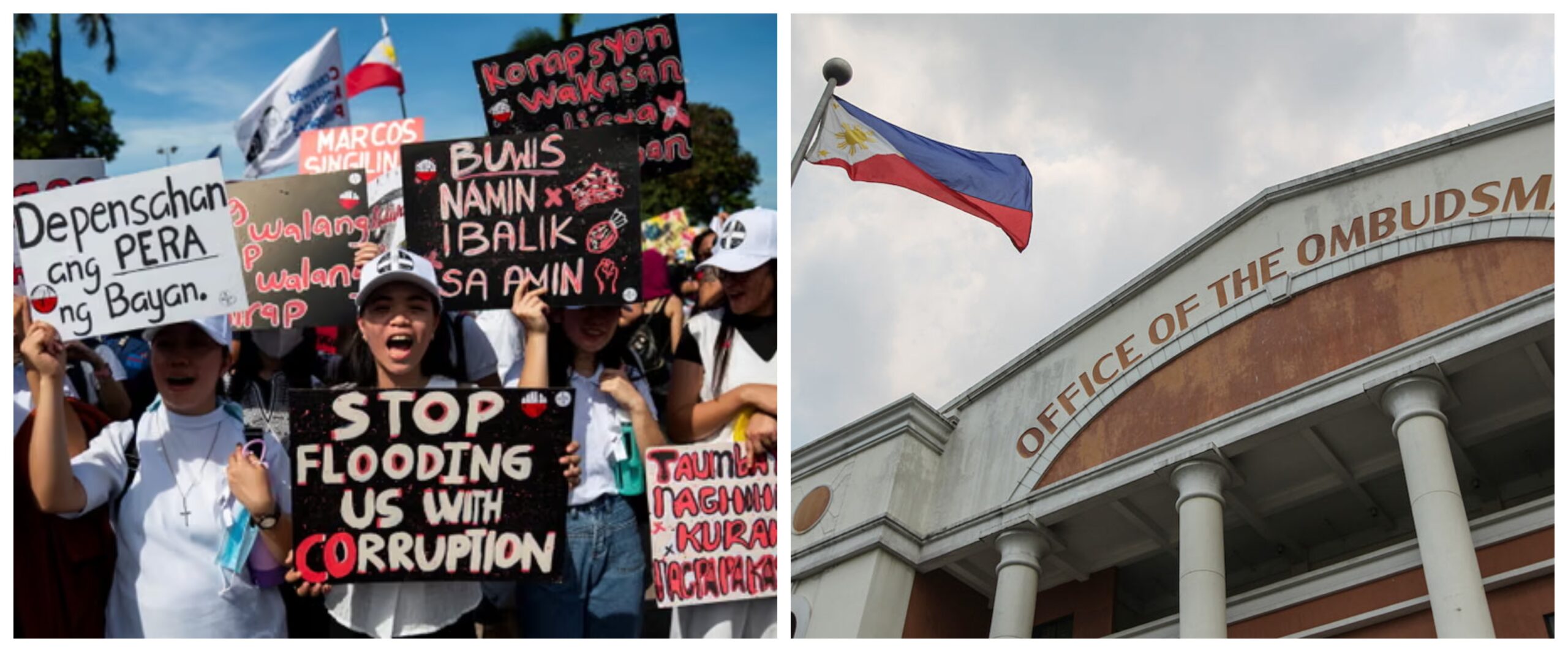
The large-scale protests seen on September 21 gave the Marcos Jr. administration a glimpse of the people’s anger. While the demonstrations that day were sparked by the public’s indignation over the ongoing Flood Control Scam controversy, the outrage ran deeper – directed at bureaucratic corruption writ large.
Much of the people’s discontent stems from the failure of our institutions, such as the Office of the Ombudsman, to hold those involved to account. Too often, corruption exposés result only in token prosecution of minor players in the controversy, while the “big fish” – the politicians themselves – escape the consequences.
The Pharmally corruption scandal serves as a prime example. In 2021, Pharmally Pharmaceuticals – a company less than a year old and with a starting capital of only ₱625,000 – managed to secure ₱11.5 billion worth of government contracts, without public bidding, to supply personal protective equipment (PPEs) during the height of the Covid-19 pandemic.
Subsequent investigations revealed evidence of ‘ghost’ deliveries amounting to ₱3 billion and overpricing of PPEs sold to government agencies. Despite these findings, none of Pharmally’s executives faced trial, nor did any of the high-ranking officials implicated in the scandal, including then–Health Secretary Francisco Duque III and former President Rodrigo Duterte – whom then-Blue Ribbon Committee chair, Sen. Richard Gordon, accused of being the ‘mastermind’ of the entire scam.
Ombudsman Remulla can help restore public trust in our institutions by revisiting the Pharmally corruption scandal and filing the proper charges against the key players in the scam – even if they include a former president.
A crucial element in regaining the people’s trust in politics is to promote transparency in government. The public disclosure of Statement of Assets, Liabilities and Net Worth (SALN) by politicians and high-ranking bureaucrats, as mandated by the 1987 Constitution, was designed to allow Filipinos to hold public servants accountable and monitor the accumulation of unexplained wealth.
It was therefore deeply concerning when Ombudsman Samuel Martires, Remulla’s predecessor, imposed restrictions on public access to officials’ SALNs in 2020. The new rules introduced stringent criteria that effectively required a court order to obtain these documents. In the absence of such, requesters – including journalists and ordinary citizens – were required to secure the consent of the official concerned, which undermines the spirit of transparency intended by the Constitution.
Reversing his predecessor’s ruling would be a step in the right direction for Ombudsman Remulla, and it is encouraging that he has already signaled openness to such reforms. A major catalyst of the September 21 protests, and the broader public discontent against politicians in general, is the alleged accumulation of unexplained wealth by elected politicians and high-ranking government officials.
Restoring public disclosure of SALNs would be a meaningful step to allay those frustrations.
Investigating and probing possible corruption in government isn’t enough, however. What the public are hungry for is ultimately holding these corrupt officials accountable – sending them to prison or disqualifying them from public office.

Philippine institutions have long been ineffective in holding powerful individuals accountable for corruption. A glaring example was the government’s failure to remove Senator Joel Villanueva from office in 2016, despite then-Ombudsman Conchita Carpio-Morales ordering his dismissal over the alleged misuse of pork barrel funds during his tenure as a member of the House of Representatives.
Villanueva had just been elected senator when the dismissal order was issued. However, the Senate refused to implement the Ombudsman’s directive, claiming that members of Congress were beyond the reach of the Ombudsman’s administrative authority.
Villanueva was just elected senator that year when the dismissal order was handed down. The Senate refused to implement the Ombudsman’s directive, insisting that members of Congress are exempted from its administrative authority.
Speaking in 2025, Morales lamented that the Senate’s defiance made the Philippines “a laughing stock” in the international community; as it showed the government’s inability “to implement [the] decisions that are spawned from legal proceedings.”
Nearly a decade later, Villanueva remains a sitting senator. Ombudsman Remulla now has an opportunity to demonstrate his commitment to upholding the rule of law by enforcing that long-standing dismissal order and ensuring that similarly powerful officials found guilty of corruption face comparable consequences.

It is inevitable that Remulla will be branded as a puppet of President Marcos Jr., installed to weaponize the powerful Office of the Ombudsman against the administration’s critics. Yet he has the opportunity to prove his independence and restore public trust – not just in himself, but in the institution he now leads
Remulla must satisfy the people’s clamor for justice and accountability among the wealthy and powerful. He must go beyond merely investigating and exposing corruption and must also ensure that those responsible are prosecuted and punished accordingly.
To succeed, the new Ombudsman must make his intentions clear to the public, with transparency as a cornerstone of his tenure. Above all, Remulla must demonstrate integrity and show that he will not spare even allies of the president who appointed him from consequences.
The level of impunity and brazen corruption the Filipino people have seen during this Flood Control Scam saga have pushed public patience to its limits. Remulla’s success in his new role will be crucial, not only in restoring stability to the Marcos Jr. administration, but to the survival of Philippine democracy itself.